
Comprehensive undergraduate programmes building strong academic and professional foundations.
Back to Department Home
Postgraduate studies focused on advanced knowledge, research, and career specialization.
Back to Department Home
Doctoral programmes fostering original research, innovation, and academic excellence.
Back to Department Home
Choose from our undergraduate courses designed to build a strong academic and professional foundation
Discover our postgraduate programmes curated for rigorous academic engagement, industry exposure and professional development.
Explore our range of doctoral programmes designed to foster radical research, inspire innovation and facilitate valuable contribution to academia
The Ph.D. (Doctor of Philosophy) in chemistry is an advanced, research-focused program that prepares individuals for careers in academia, industry, or government sector. This program typically involves an in-depth study on any chosen area in the domain of chemistry and requires scholars to contribute, to the field of chemistry through their original research. It opens up diverse career paths and equips the graduates with the skills needed for professional roles in their careers. The first six months of the program is dedicated to coursework, designed to provide a strong theoretical foundation to research along with common subject-based topics. Scholars are then allowed to choose their own research area based on their interests. The Department of Chemistry comprises of faculty with expertise in diverse areas, including materials chemistry, heterogeneous catalysis, electrochemistry, organic synthesis, food technology, energy storage and production, computational chemistry, molecular recognition, and liquid crystals.
Scholars will be assigned a faculty supervisor, with whom they will work closely to design, develop, and execute their research projects. Research may involve experimental work, computational studies, or a combination of both. Research progress is evaluated by a research advisory committee comprising the supervisor and two faculty members with expertise in the subject area, through regular meetings, presentations, and written reports. Ample opportunities for professional development, such as attending conferences, workshops, and presenting research findings, are available. Scholars are often encouraged to gain teaching experience, usually through serving as teaching assistants. They are expected to adhere to high ethical standards in their research, including proper conduct and honesty in data handling and reporting. Ph.D. graduates are well trained to take up teaching/research positions at colleges and universities or work in research and development wings of pharmaceutical, chemical, and biotechnology industries.
The two-year (four semesters) Masters Programme in Chemistry (specialization in Organic/ Analytical/ General/ Materials Chemistry) aims at providing a comprehensive study of various branches of chemistry to develop a critical and analytical approach to all major areas of the subject. The program typically builds upon the foundational concepts learned at the undergraduate level and allows students to specialize in a particular area of chemistry.
The various courses in the first two semesters are presented in such a way as to give the students a harmonious view of the subject followed by the specialization courses of organic chemistry along with an industrial/institutional project in the third semester. Equal importance is given to both theory and practicals. The teaching methodology includes lectures, demonstration, seminars, projects, and presentations.
The Chemistry and Zoology Bachelor of Science program with a Minor in Forensic Science offers a robust blend of fundamental science and application-oriented learning. It integrates core concepts of chemical sciences and animal biology with the analytical rigor of forensic investigation, ensuring that students develop a strong conceptual foundation alongside practical laboratory competence. Emphasizing hands-on training, the curriculum nurtures skills in qualitative and quantitative analysis, microscopy, toxicology, ecology, and physiology, preparing students to address real-world scientific and investigative challenges.
Specialized Zoology and Chemistry courses are complemented by focused Forensic Science modules, enabling students to understand how scientific principles are applied in crime scene examination, evidence collection, and laboratory analysis. This interdisciplinary structure equips graduates with competencies relevant to emerging opportunities in forensic laboratories, environmental agencies, wildlife conservation, pharmaceuticals, and diagnostic laboratories. Through guided projects, case-based learning, and experimental work, students gain proficiency in techniques such as forensic chemistry, DNA analysis, and trace evidence evaluation, effectively bridging classroom learning with professional practice.
The program recognizes the growing societal and legal importance of scientific evidence, highlighting the synergy between chemical analysis, zoological knowledge, and forensic applications. By emphasizing ethical responsibility, scientific integrity, and sustainability, it prepares students to contribute responsibly to criminal justice, biodiversity conservation, and public health. Graduates are thus well-positioned for higher studies in Chemistry, Zoology, or Forensic Science, as well as for careers that demand analytical thinking, meticulous observation, and interdisciplinary problem-solving.
Bachelor of Science (Physics, Chemistry, Mathematics/Honours/Honours with Research)
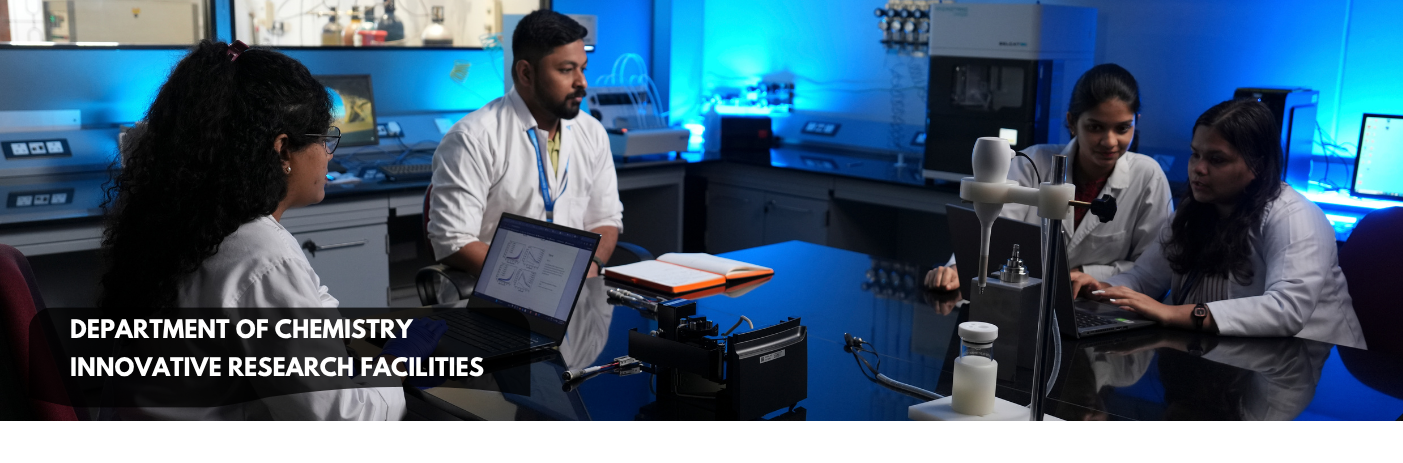
Our department drives excellence in Chemistry through transformative research opportunities and advanced studies at the undergraduate and postgraduate levels.
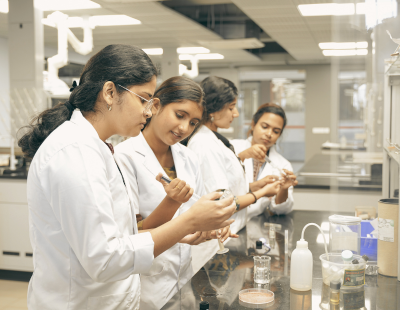
Doctoral Research Programme
Explore our research highlights, showcasing groundbreaking discoveries and innovative projects driving advancements in Chemistry.
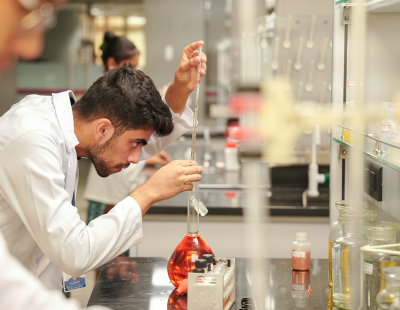
PG Research Programme
Our postgraduate research programmes provide advanced training, fostering innovation and preparing students for leadership roles.
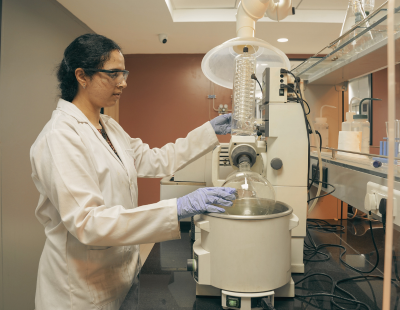
UG Research Immersion Programme
Our undergraduate students engage in research from the first year of their university education, providing them ample time to pursue impactful research outcomes.


